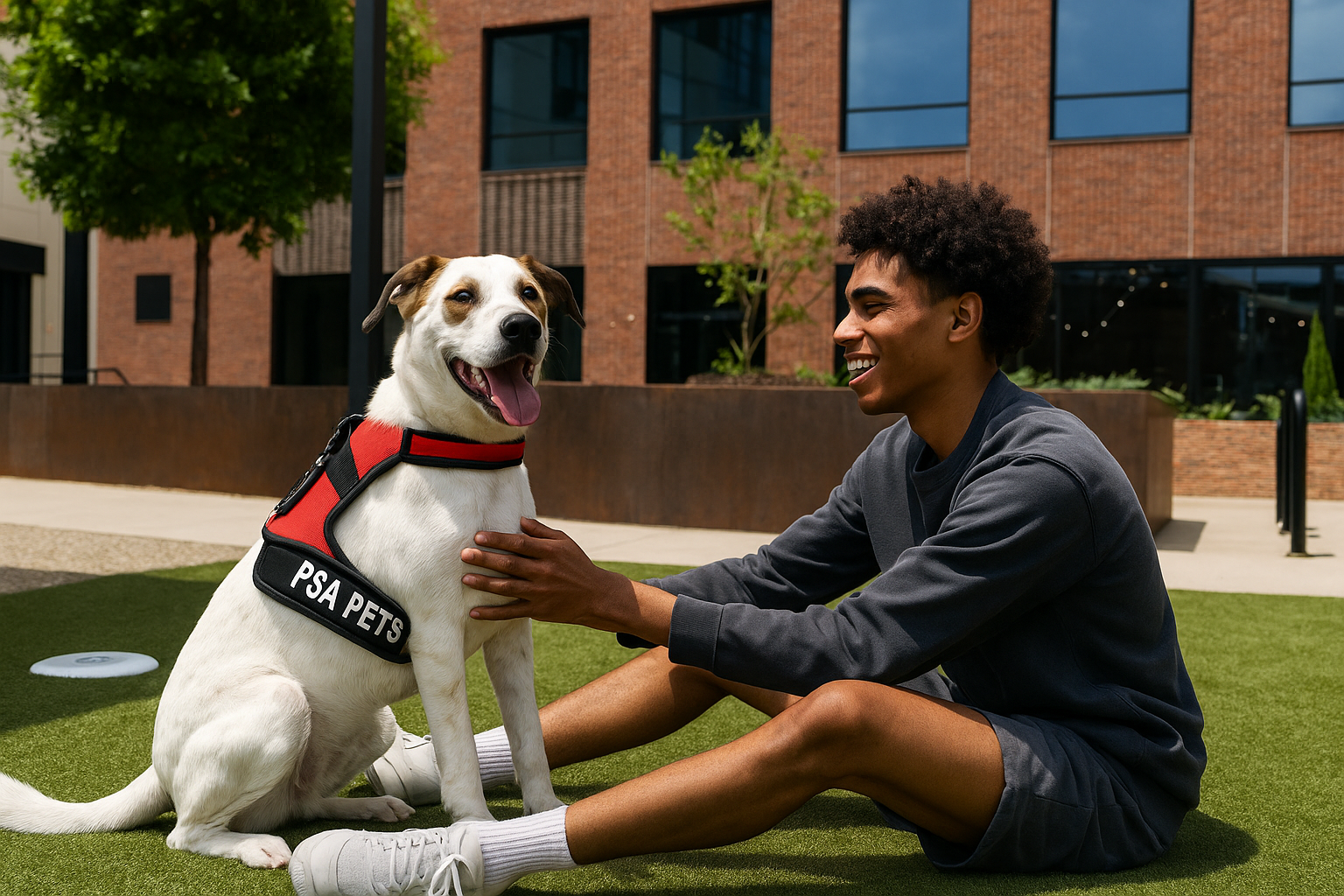
ESA at Work
Emotional Support Animals are not automatically permitted in workplaces. However, under the ADA’s interactive accommodation process, many employers review requests individually. Approval often depends on whether the animal can remain quiet, clean, and non-disruptive in a professional setting.
Student & Off-Campus Housing
Most off-campus rentals follow FHA rules. With a valid ESA letter, students may live with their support animal even in buildings that normally prohibit pets. Some landlords may request advance review of documents and basic pet information before move-in.
Support Pets provides ESA letters for dogs and cats only.
Public Places & Travel
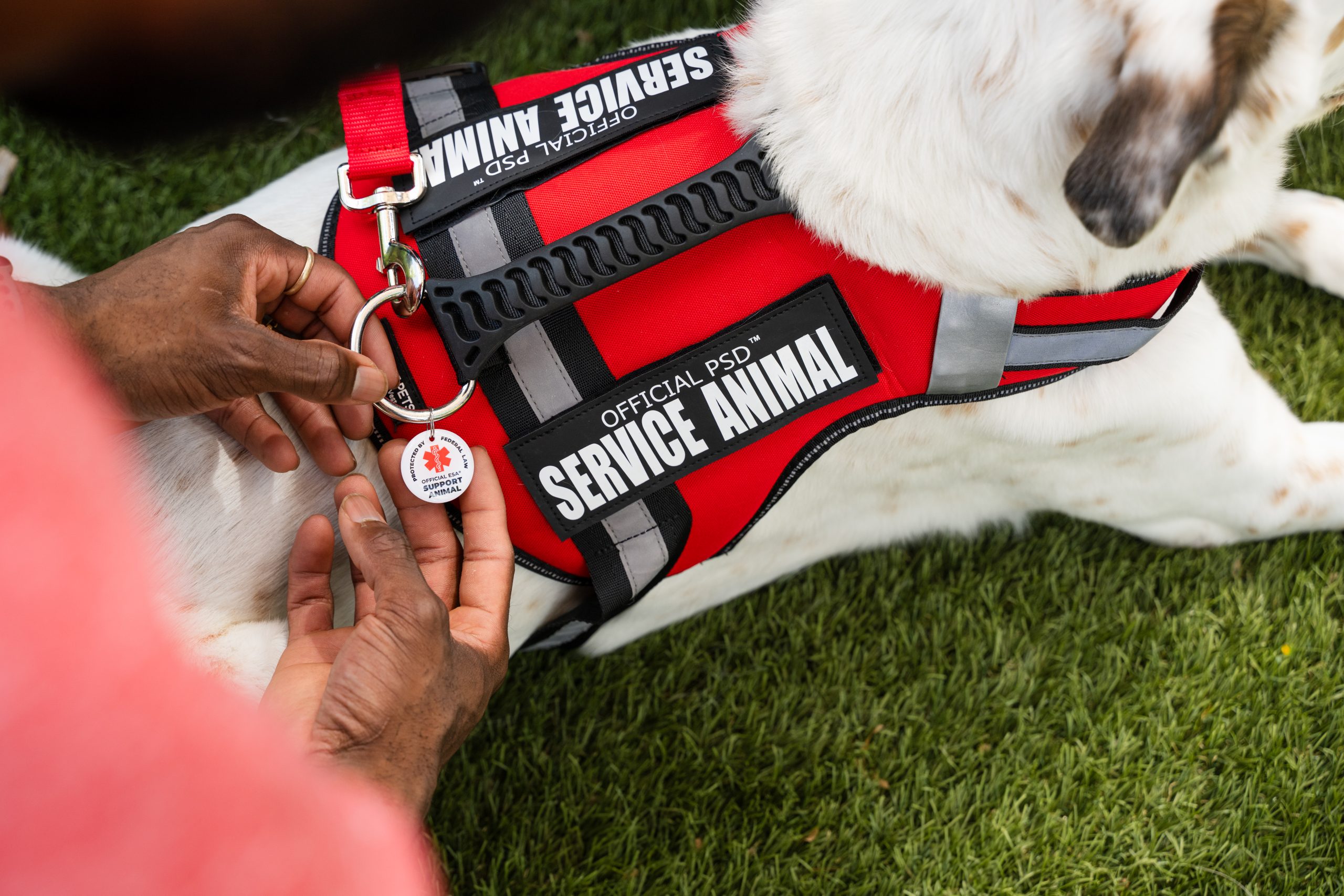
Unlike service dogs, ESAs do not have guaranteed access to public businesses such as restaurants, hotels, and shopping centers. Admission is typically at the discretion of the business owner. Politely calling ahead and carrying a digital or printed ESA letter often helps avoid misunderstandings.
Choosing or Adopting the Right ESA
The success of an Emotional Support Animal depends far more on emotional compatibility than on breed or species. A few practical factors can help ensure a strong match:
Temperament is key:
A calm, steady mixed-breed pet often provides better emotional support than a high-energy purebred.
Match your environment:
Cats and small dogs tend to thrive in apartments, while larger dogs are better suited for homes with outdoor space.
Support Pets issues ESA letters for dogs and cats only.
Adoption offers added benefits:
Many shelters conduct temperament assessments, helping owners find animals well-suited for emotional support. Nearly half of ESA owners adopt from shelters—providing mental-health support while giving a homeless pet a second chance.
Basic training matters:
Pets that respond to commands, behave calmly in public, and interact politely with others are more likely to be accepted by landlords and housing managers.
The ASPCA reports that approximately 3.2 million animals are adopted from U.S. shelters each year. Adopting gives you access to pets that have already undergone behavioral screening. Shelter staff can often confirm how well an animal handles noise, crowds, and unfamiliar environments—key traits for a successful ESA relationship.